
At first, we notice the form: the line of the blade, the proportions of the handle, the way light travels across the metal. Only then do the details begin to emerge—a single feather, the texture of an animal’s fur, the scales of a dragon, the rhythm of an ornamental scroll, or a line of gold set against a darkened background.
A hand-engraved knife rarely reveals everything at first glance. The longer we look, the more it has to show.
Such a knife is the result of two creative personalities coming together. The knifemaker gives it form, mechanics, and character. The engraver adds a second story to the metal—written in lines, dots, light, and shadow.
The result is more than a precision tool. A hand-engraved knife becomes a small, functional work of art that can be held in the palm of your hand.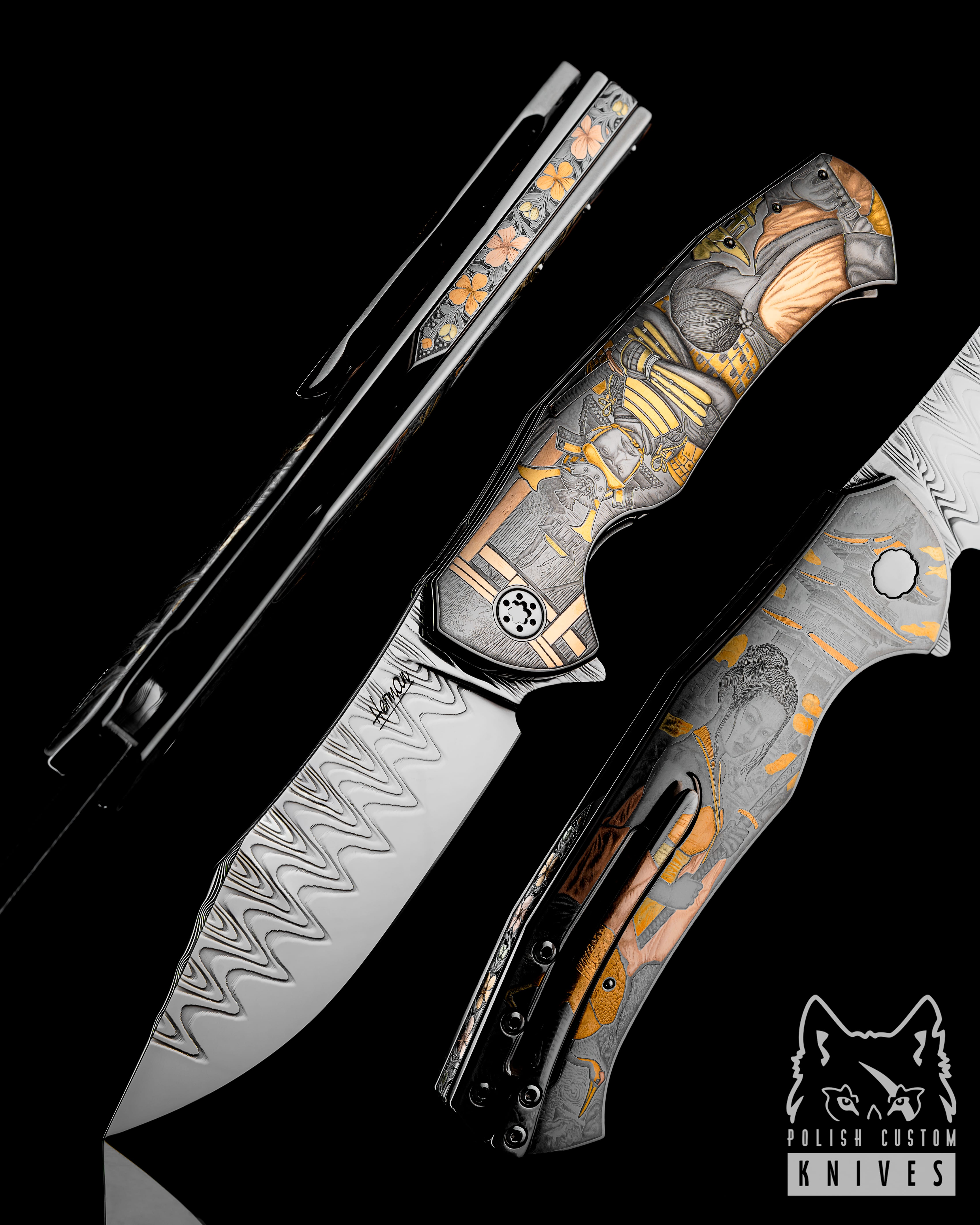
Hand engraving involves cutting a design directly into the surface of the metal using specially prepared gravers. Rather than simply applying a finished image to the knife, the engraver gradually constructs it from hundreds, and sometimes thousands, of individual cuts.
Each cut has a precise depth, width, and direction. The way the graver is guided determines not only the shape of the line, but also how it will reflect light. In this sense, the engraver works simultaneously as a draftsman, sculptor, and jeweler.
Much of this work is carried out under a magnifying lens or microscope. What appears to the naked eye as a smooth tonal transition may, under magnification, reveal itself as a dense network of microscopic dots and lines.
Not every metal responds in the same way. Steel, titanium, brass, silver, and gold differ in hardness and in the way they behave beneath the cutting edge of a graver. The engraver must understand how to guide the tool to produce a clean cut without disturbing the balance of the composition.
This is why a fine engraving is far more than surface decoration. It reveals not only artistic ability, but also an understanding of materials, years of experience, and the individual style of its creator.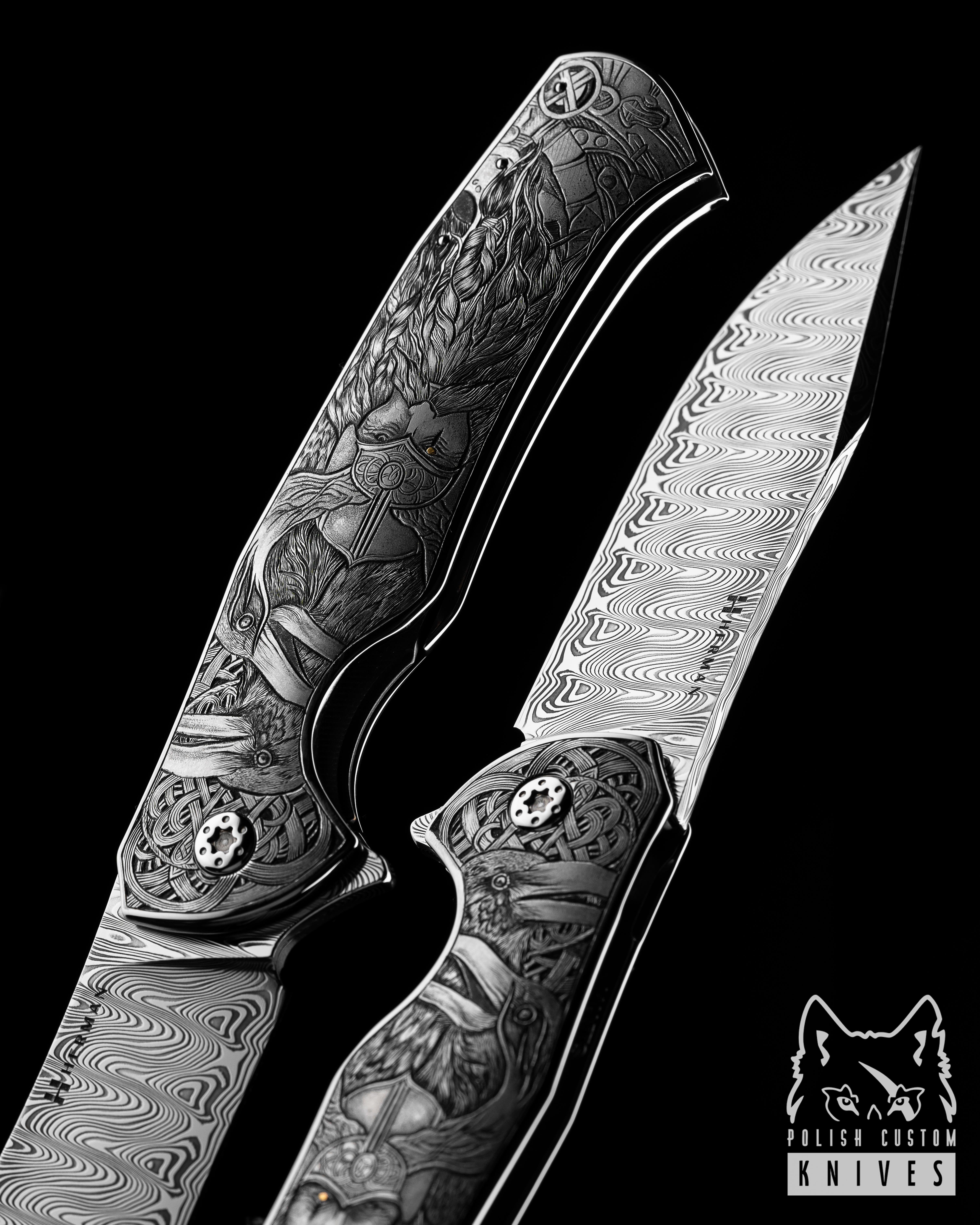
An exceptional engraving begins long before a tool ever touches the metal.
The starting point may be the silhouette of the knife, the material chosen for the handle, the personality of the knifemaker, or a story the future owner wants to connect with the piece. A slender folder may provide the perfect foundation for a delicate ornamental composition. A more substantial design may invite deep relief, a dynamic scene, or a bold animal motif.
The engraver must adapt the design to a small and often irregular surface. Edges, screws, openings, bolsters, backspacers, and the natural lines of the handle all have to be considered. The finest compositions never appear to have been added to a finished object as an afterthought. They look as though they were always meant to be part of the knife.
The first cut is a decisive moment. The drawing ceases to be a design that can be freely revised and begins to exist permanently in the metal. From that point onward, every movement matters.
Depending on the scale and complexity of the design, the work may take many hours, days, or even weeks. There is no place for haste. In engraving of the highest order, time is not an obstacle—it is one of the materials.
The term “hand engraving” does not refer to a single method. Engravers use a variety of tools and techniques, selecting them according to the composition and the effect they wish to achieve.
One of the most traditional methods involves guiding the graver using only pressure from the hand. This provides exceptional control over delicate cuts, but it also requires a highly developed sense of how the metal resists the tool.
The technique is particularly well suited to subtle ornamentation, lettering, and fine details. Even the slightest change in the angle of the tool can affect the width of a line and the way it catches the light.
With this method, the engraver guides the cutting tool with one hand while striking it with a small engraving hammer held in the other. Each strike moves the cutting edge forward by a controlled amount.
This makes it possible to produce stronger, deeper cuts and is therefore often used for bold outlines, traditional ornamentation, and relief work. The final effect depends on the force and rhythm of the strikes, requiring precise coordination between both hands.
Many contemporary engravers also use pneumatic tools that drive the graver with a rapid series of controlled impacts. This does not mean that the design is produced automatically.
The tool supplies the energy, but the engraver’s hand still determines the direction, depth, and character of every cut. A pneumatic handpiece can therefore be compared to a painter’s brush: it does not create the image by itself, but it enables the artist to achieve a particular result.
This is the essential distinction between hand engraving and laser or machine engraving, where a programmed design can be reproduced repeatedly.
The way the graver is driven is only one part of an engraver’s craft. Equally important is the style in which the composition is created.
Traditional line engraving is constructed from flowing cuts arranged into botanical, geometric, heraldic, or scrollwork patterns.
The quality of the engraving depends on the rhythm of the composition. The lines should guide the eye, follow the shape of the knife, and retain a natural sense of movement. Shading created with finer cuts gives the ornament depth, allowing its appearance to change as the angle of the light shifts.
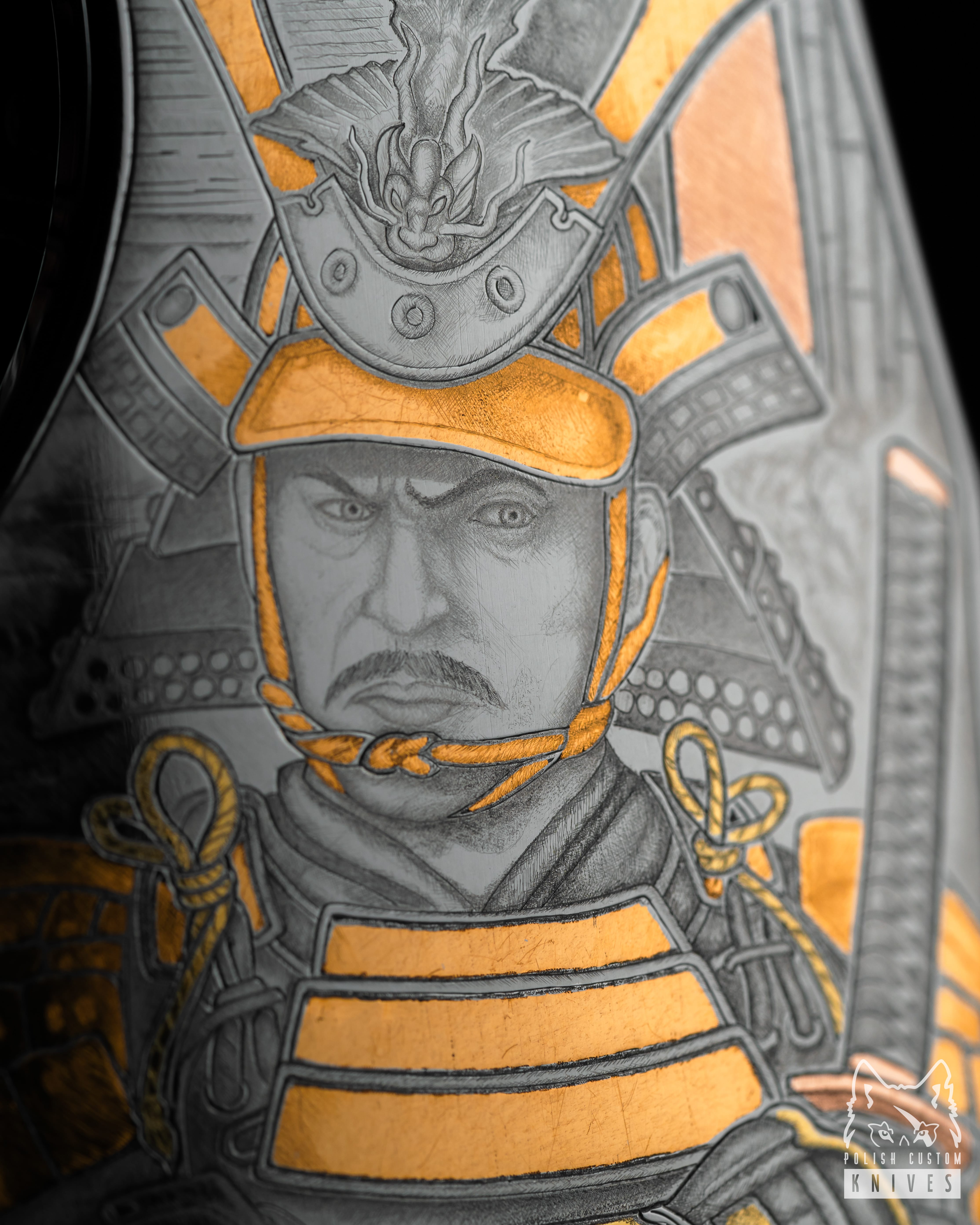
Bulino is most often associated with realistic portraits, animals, landscapes, and complex figurative scenes. The image is constructed from an immense number of extremely fine dots and short lines.
Their placement creates light and shadow. The more densely the cuts are arranged, the darker the area appears. Surfaces left almost untouched reflect more light, forming the brightest parts of the image.
This makes it possible to reproduce the texture of fur, individual feathers, wrinkles, reflections in the eyes, and subtle tonal transitions. The full artistry of a bulino engraving often becomes visible only under magnification.
A related but distinct approach is banknote-style engraving. Here, the image is constructed primarily from extremely fine, carefully organized lines and cross-hatching, reminiscent of illustrations found on historic banknotes and prints.
By varying the distance between the lines and crossing them at different angles, the engraver creates shadows, textures, and a sense of depth. This technique is particularly effective for portraits, heraldic designs, and compositions with an elegant, classical character.
Bulino and banknote-style techniques can also be combined. Microscopic dots create subtle tonal transitions, while precise lines define contours and structure.
In relief engraving, the engraver removes the metal surrounding selected elements of the design. This creates different levels in the surface, allowing an ornament, animal, or figure to rise above the recessed background.
The relief may be subtle or exceptionally deep. In the most advanced examples, the remaining surface is further modeled and textured. Feathers, scales, leaves, or anatomical details are given genuine volume, until the boundary between engraving and miniature sculpture almost disappears.
This technique demands exceptional spatial awareness. Every cut is irreversible: once the material has been removed, it cannot be restored.
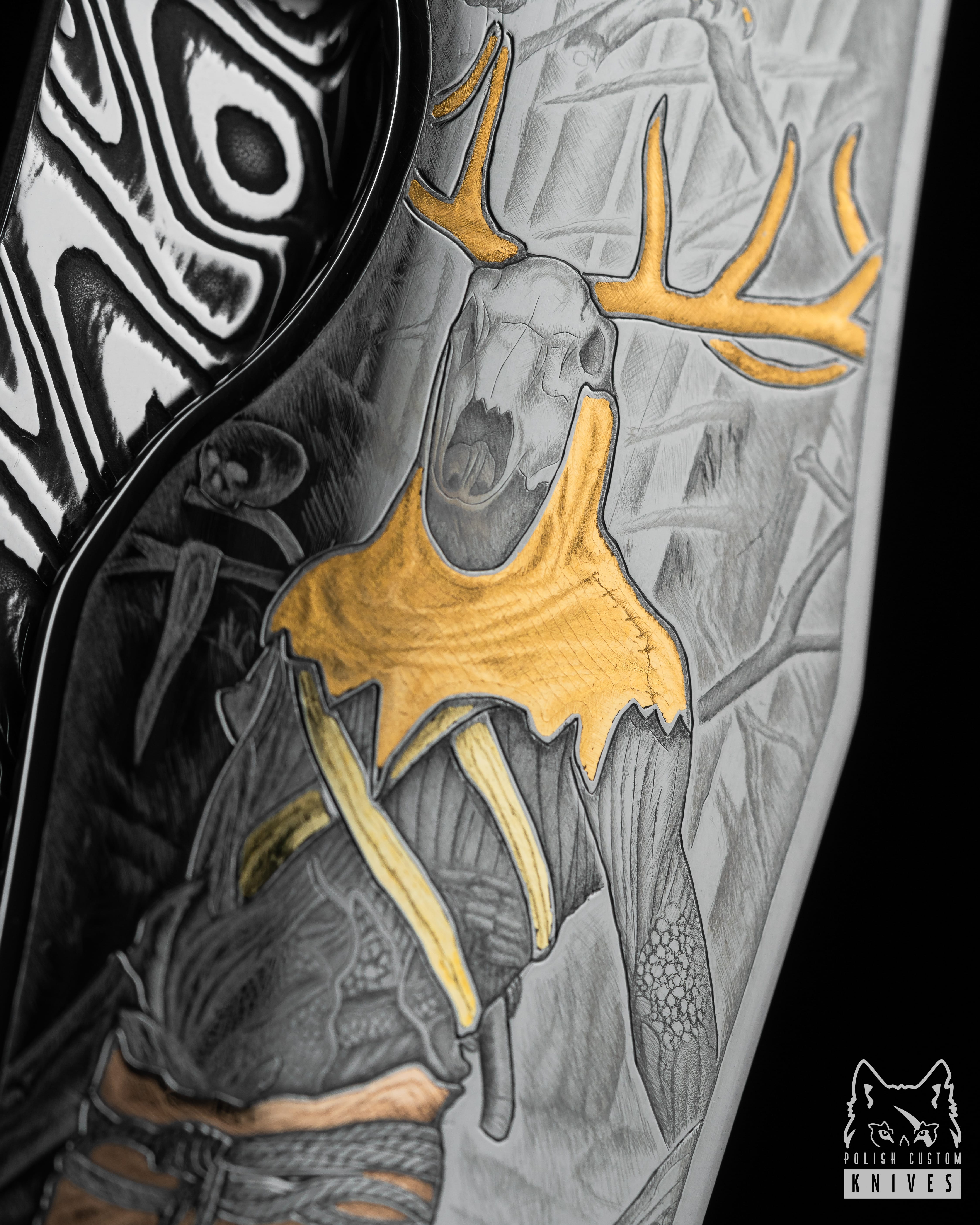
An engraving may also be enhanced with inlay—the process of setting one metal into the surface of another. The engraver prepares carefully shaped recesses and then introduces gold, silver, copper, or another contrasting material.
The inlay may form an entire motif or emphasize only the most important details: an animal’s eyes, the outline of an ornament, lettering, or selected elements of a scene. Precious metal set against darker steel or titanium catches the light and gives the composition additional depth.
This is not a surface coating. A properly executed inlay is mechanically secured within the prepared recess, becoming an integral part of the engraving.
In the finest work, the background surrounding the main motif is just as important as the motif itself. It may be recessed, matted, darkened, or covered with thousands of tiny marks.
One technique used for this purpose is stippling, which creates a consistent, finely textured surface. A darker background reduces reflections, allowing polished lines, relief work, and metal inlays to stand out more clearly.
The finest engravers combine these techniques with complete freedom. A flowing ornament may develop into deep relief, a realistic bulino scene may be surrounded by a textured background, and its most important detail may be highlighted in gold. The quality of an engraving, however, is not determined by the number of techniques used, but by how coherently they work together.
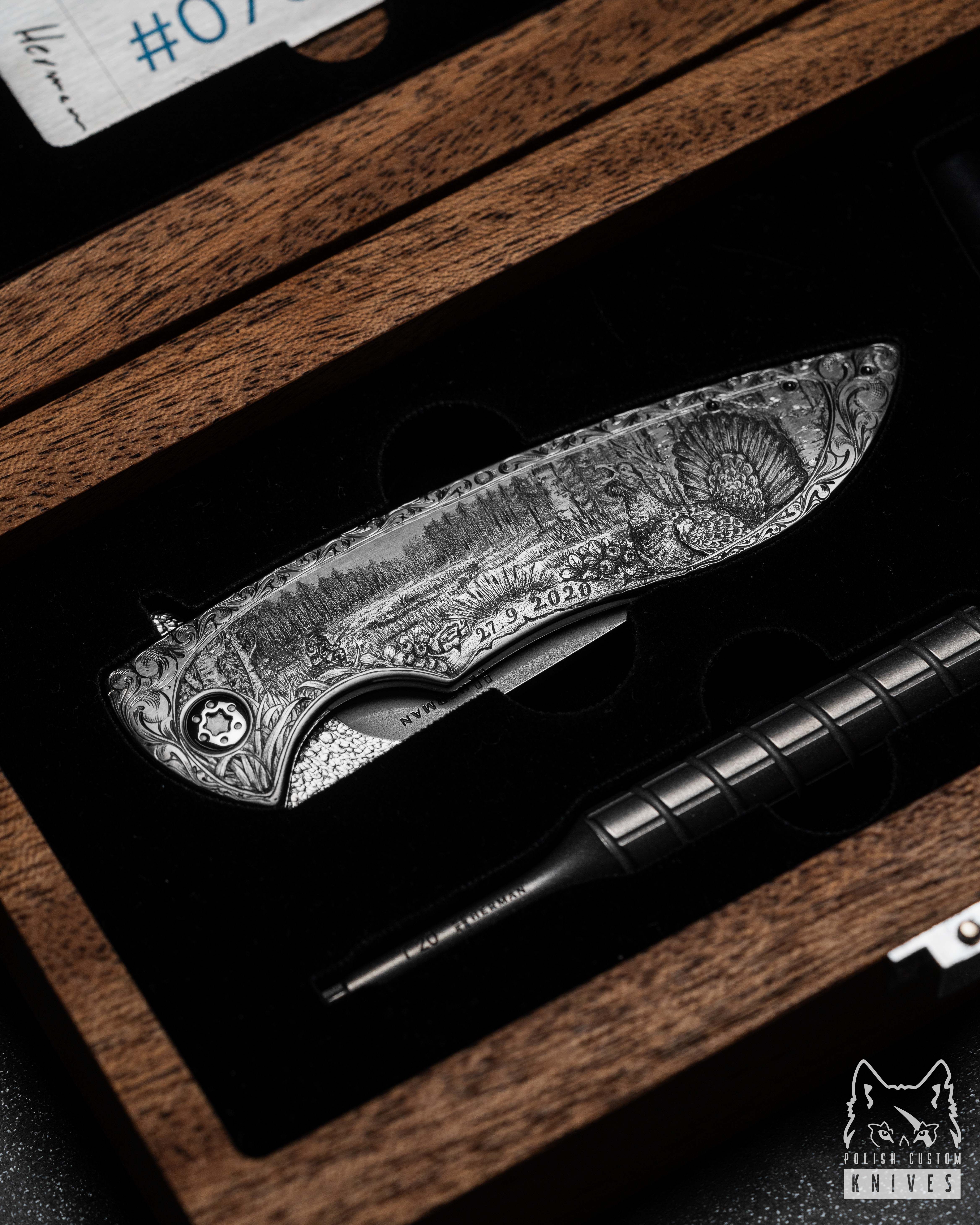
The greatest power of hand engraving lies not only in its decorative beauty. A design can give a knife a significance that even the most advanced blade steel or exotic handle material cannot provide on its own.
A motif may refer to nature, mythology, history, or the owner’s personal experiences. A wolf, raven, dragon, or elaborate ornamental design does not have to serve as decoration alone. It may represent a particular quality, recall a memory, or express values important to the collector.
Custom commissions form a category of their own. An important date, initials, a family symbol, a heraldic element, or a motif connected with the owner’s passion can make a particular knife impossible to replace with any other.
Such a knife may remain with one person for many years and eventually become an object passed down to the next generation. Its story does not end when it leaves the workshop. That is where its next chapter begins.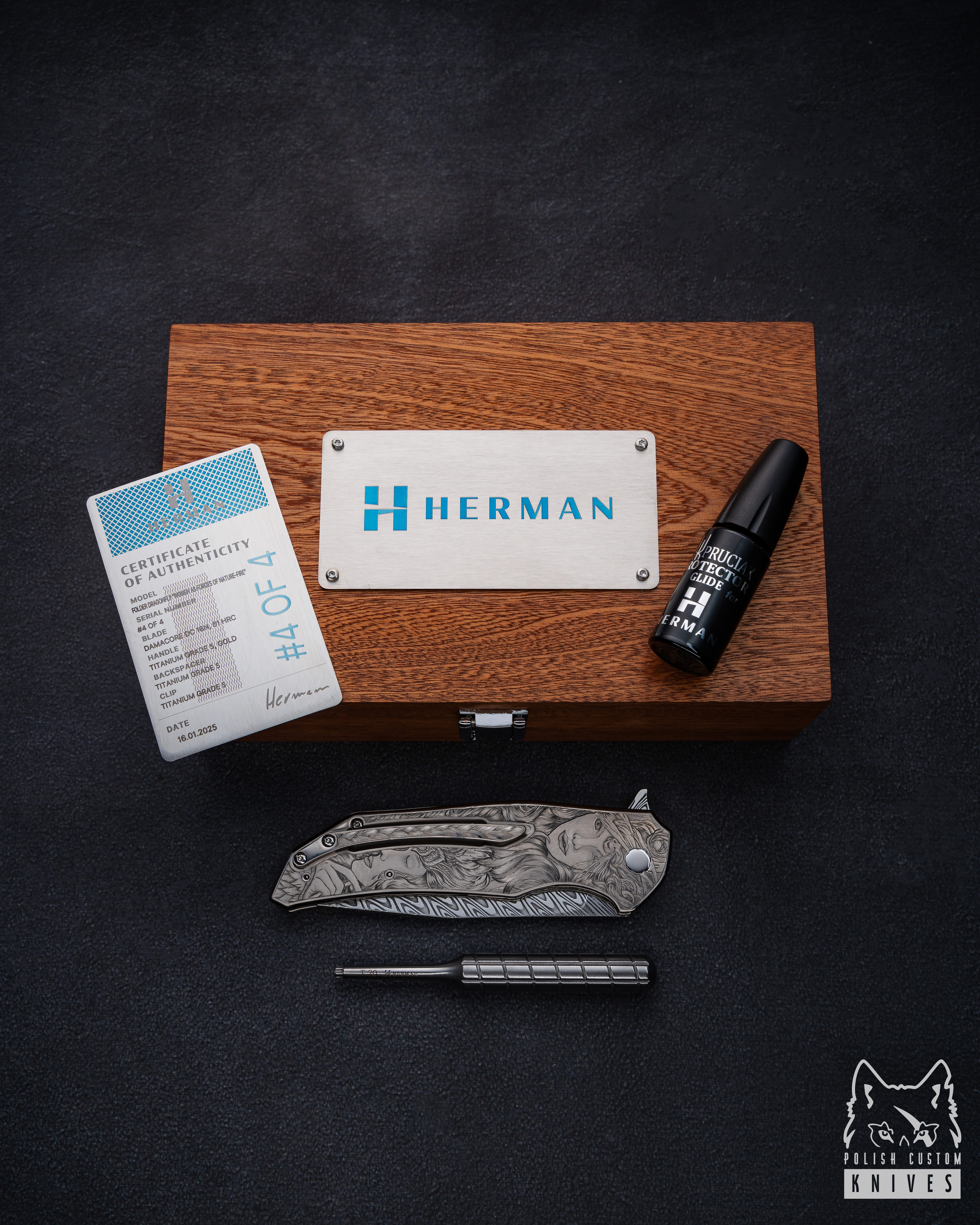
The value of a hand-engraved knife depends on far more than the number of hours required to create it.
The foundation is the knife itself: the quality of its construction, the precision of its mechanism, blade geometry, materials, and the reputation of the knifemaker. The second layer is the engraving—its composition, complexity, techniques, and the distinctive style of the engraver.
The most sought-after pieces are the result of genuine collaboration between their creators. The form of the knife and the engraving do not compete for attention; they complement one another. The decoration follows the lines of the construction, emphasizes its proportions, and brings out the character of the individual model.
Uniqueness also matters. Even if an engraver returns to a motif used before, the arrangement of the lines, shading, and smallest details will differ when executed by hand. Every piece carries the record of individual decisions made during its creation.
Provenance is equally important to collectors: the names of the creators, supporting documentation, certificates, commission history, and confirmation of authenticity. Together, these elements establish the identity of the piece and place it within the body of work of a particular knifemaker and engraver.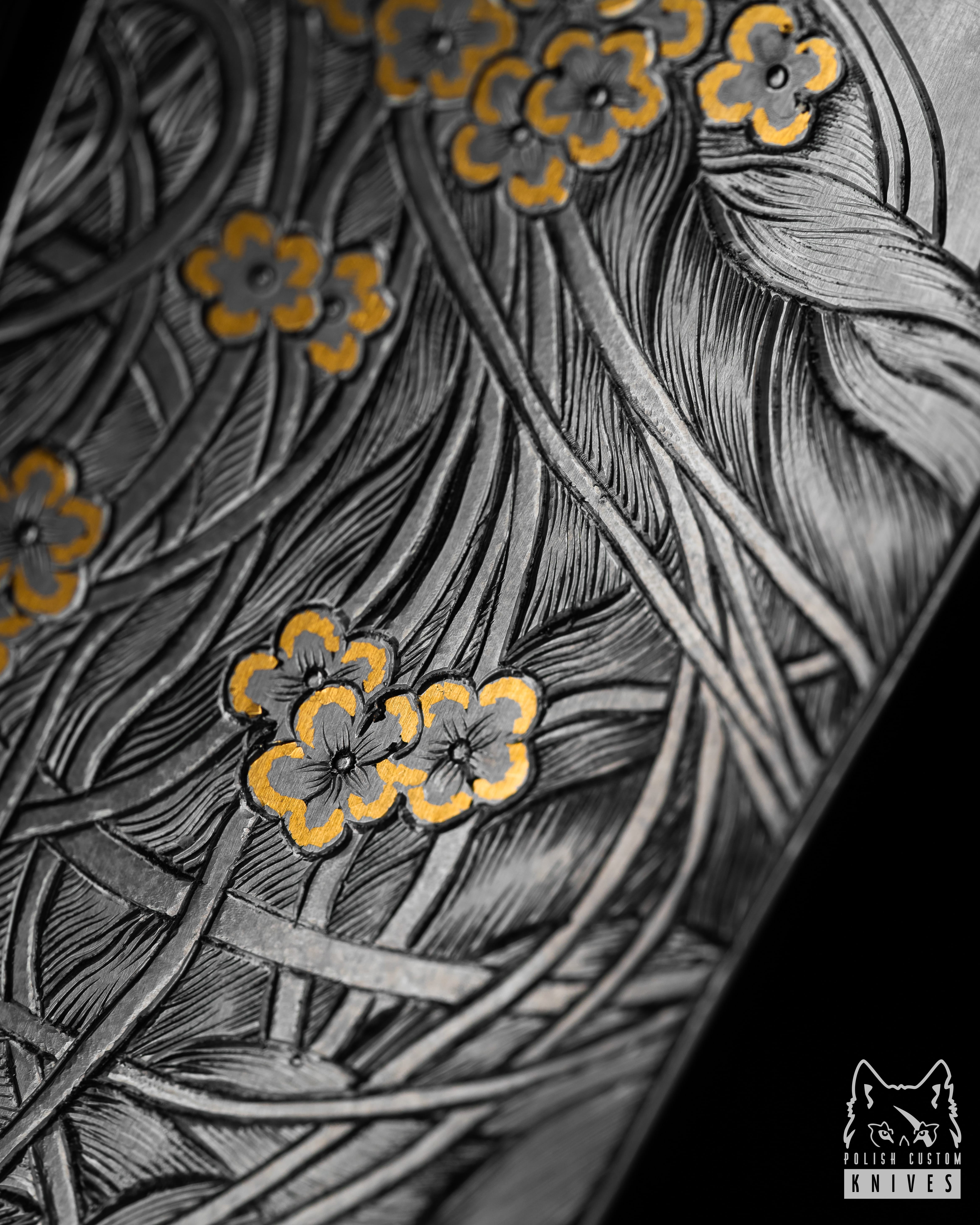
A hand-engraved knife is still a knife. It may remain a fully functional tool, although the way it is treated depends on its owner and the nature of the individual piece.
Some collectors display engraved knives in showcases or keep them in dedicated cases. Others carry them as exclusive EDC pieces, accepting that signs of use will gradually appear on their surfaces.
The engraving itself is durable because it has been cut directly into the metal. Delicate finishes, polished surfaces, inlays, and the crisp edges of relief work may nevertheless require special care.
The knife should be protected from moisture, aggressive chemicals, and contact with objects that could scratch its surface. A soft cloth is generally the safest choice for cleaning, while any maintenance should be adapted to the metals used and the recommendations of the creators.
Signs of carry do not necessarily diminish a knife’s character. They can become part of its story. It is worth remembering, however, that intensive use will usually affect the collectible condition of the piece.
First impressions matter, but an artistic engraving deserves more than a passing glance.
Begin with the composition as a whole. Does it work with the shape of the knife? Does it guide the eye, or does it appear to have been placed on the handle without regard for the underlying form?
Then consider the details:
The finest engraving works on two levels. From a distance, it forms a bold and harmonious composition. Up close, it rewards the patient observer with details that could not be seen before.
It is this depth that allows us to return to certain knives again and again—and discover something new each time.
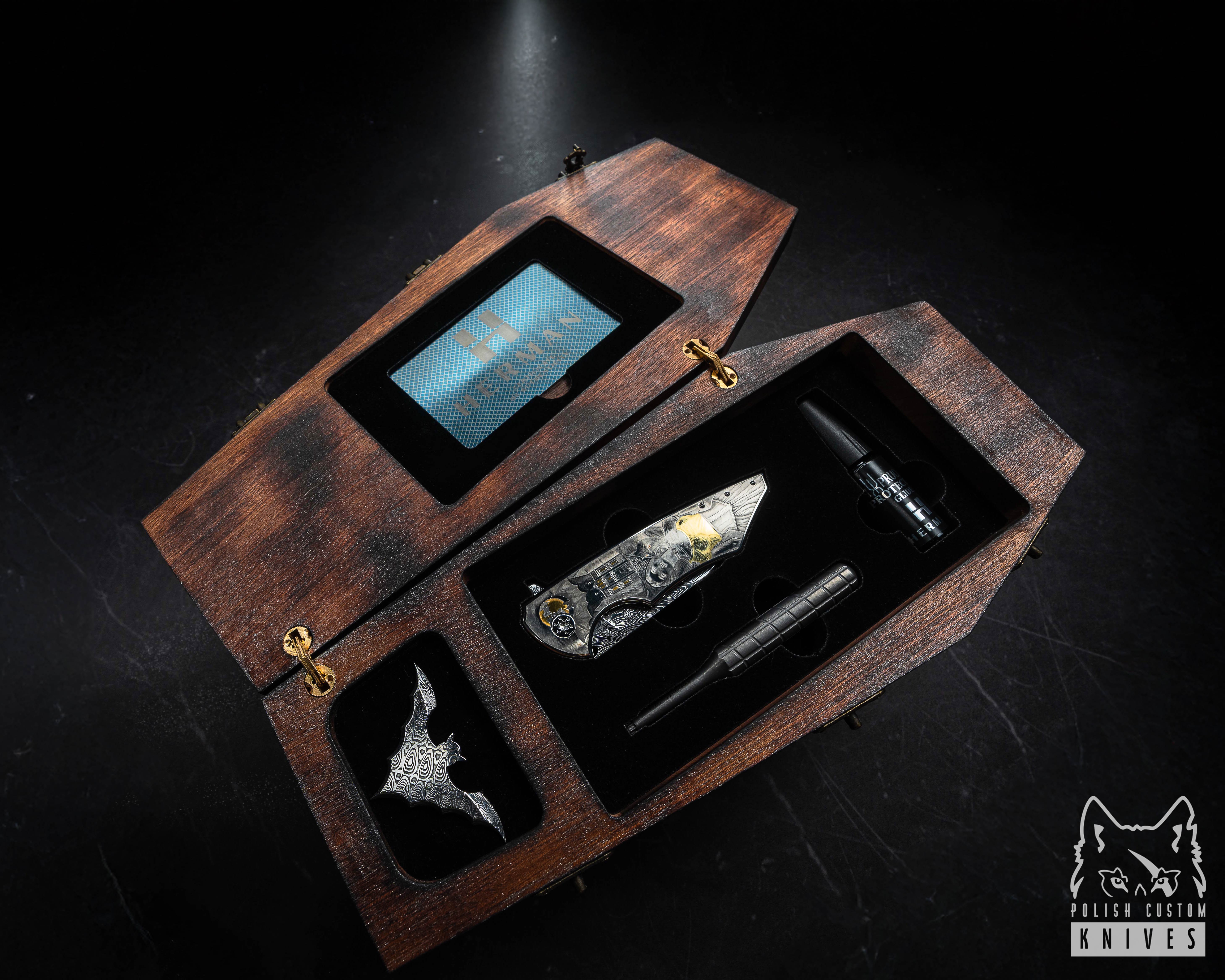
Two distinct arts come together in a hand-engraved knife.
The knifemaker is responsible for its construction, proportions, mechanics, and functionality. The engraver gives its surface a second life, inscribing it with an image, symbol, or story. One creates the form; the other reveals the possibilities hidden within it.
When both creators understand each other’s style, the result goes far beyond the traditional idea of a knife. Function does not disappear beneath decoration, and art does not become a mere addition to a tool.
At Polish Custom Knives, we have the opportunity to witness such collaborations at close range. Every hand-engraved piece demonstrates how much patience, experience, and personality can be contained within an object small enough to fit in one hand.
These knives are created not merely to be owned. They are made to be studied, to have their stories discovered, and to reveal the craftsmanship hidden within their finest cuts.
Because when steel finds its way into the hands of a true engraver, it ceases to be merely a material. It becomes a canvas.