
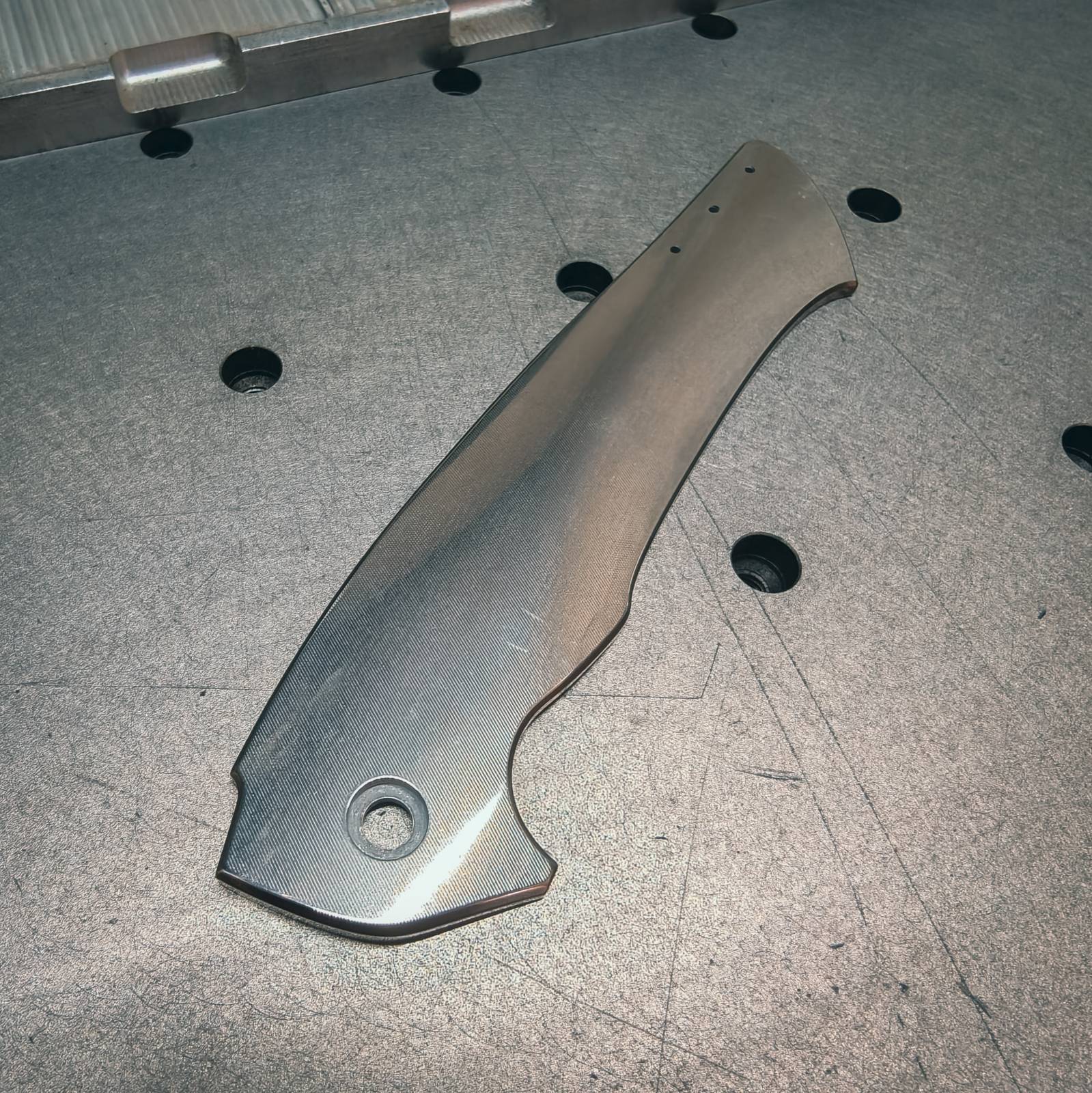
At Herman Knives, nothing happens by accident. Every detail, before becoming part of the final knife, goes through a long journey – from a raw piece of metal to a perfectly finished surface ready for engraving. It’s a process the average observer never notices, yet it is precisely this process that determines the uniqueness and quality of our products.
Preparing titanium for laser engraving is a multi-stage job requiring immense precision. First, every surface is carefully cleaned and degreased to remove even the slightest traces of production. Then we subject it to finishing – whether through subtle bead-blasting, glass-blasting, matting, or hand-satin finishing – to give it uniformity and a character that will later highlight the contrast of the engraving.
These are not tasks carried out in haste. They are hours of manual work, patient polishing, and quality control that no machine can replace. Every stage is another step toward perfection – inspected, refined, adjusted until we achieve a surface that allows the laser to unlock its full potential.
The final effect is not mere decoration. Much like in fine jewelry, we achieve the optimal balance between spectacular appearance and durability. An engraving on a Herman Knives blade is a hallmark – an expression of craftsmanship, patience, and design vision that has distinguished our work in the knife-making world for years.
For anyone holding a Herman Knives piece, the detail is striking. For us, it is the result of dozens of hours of work, hundreds of small decisions, and thousands of microscopic adjustments that make the outcome truly uncompromising.
Thorough cleaning and preparation of the element for further processing
Delicate sandblasting, glass-blasting, matting, or preparation for polishing or satin finishing
Fine-grained abrasives to achieve a uniform texture
High-gloss polishing or hand satin finishing, and in some cases texturing the surface to create an “orange peel” effect depending on the desired result
Careful cleaning of the part from residues of previous processes
Precise degreasing
If necessary, protecting parts that are not to be exposed to laser engraving
Quality control before engraving
Laser setup and program execution
After the laser process, secondary quality control
Work on the knife does not end with engraving itself. Once the engraving is complete, there is still plenty to do, depending on the desired final effect. Anodizing, coatings, or hammer-finishing details – there are countless options, and each additional stage demands extensive manual work. It is precisely this combination of skilled human labor with advanced precision technology that creates the true spirit of Herman Knives.
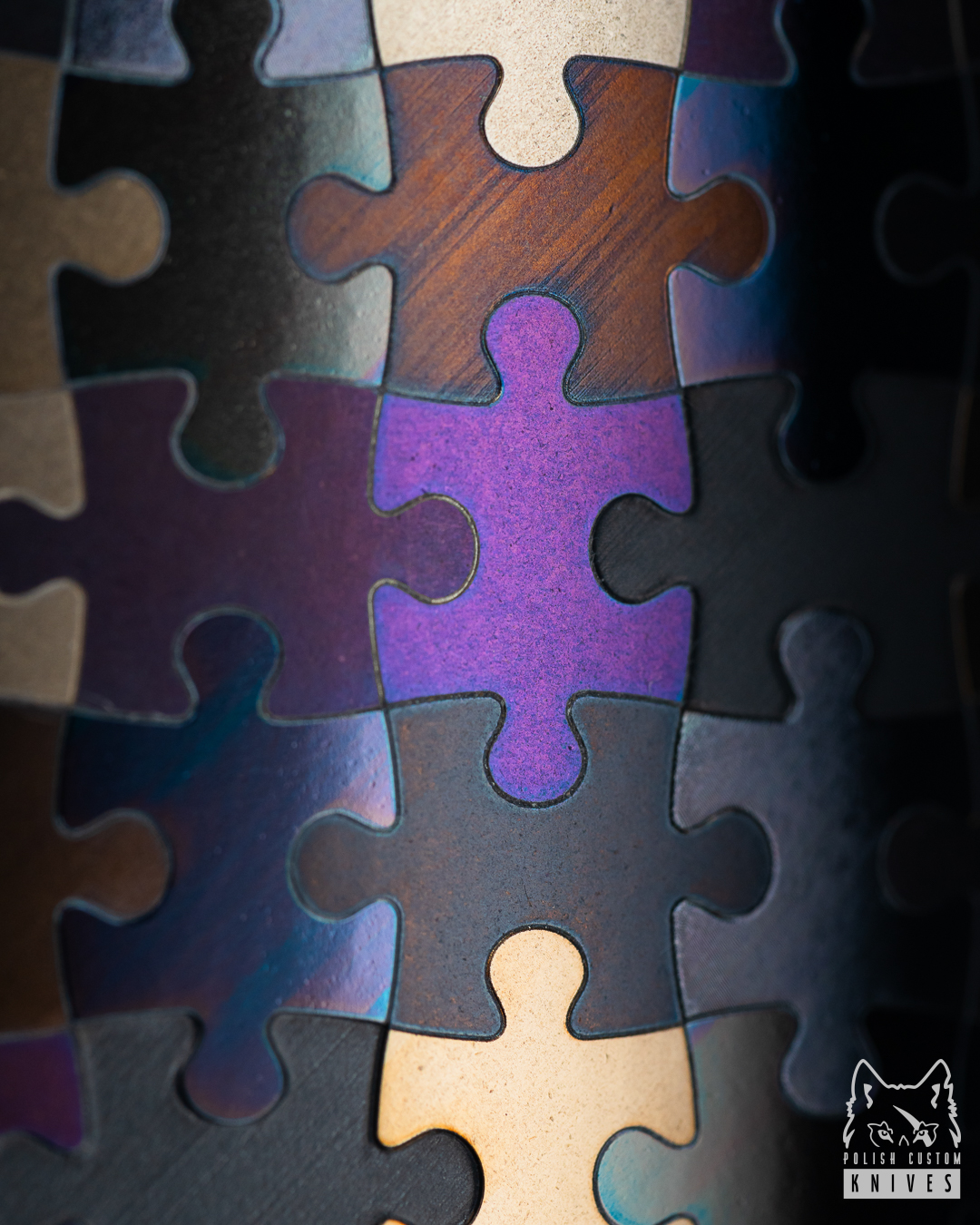
The “Puzzle” motif is a composition in which every element has its place – a symbol of seeking harmony and order in a world full of contrasts. It draws the eye into its structure, allowing one to discover piece by piece, like stages along a journey. On a full handle it takes 16 hours to complete, and on an inlay 8 hours – yet in either form, it is a testament to patience and precision. Puzzle is not just decoration – it is a story about finding the missing piece, about striving for coherence and perfection.
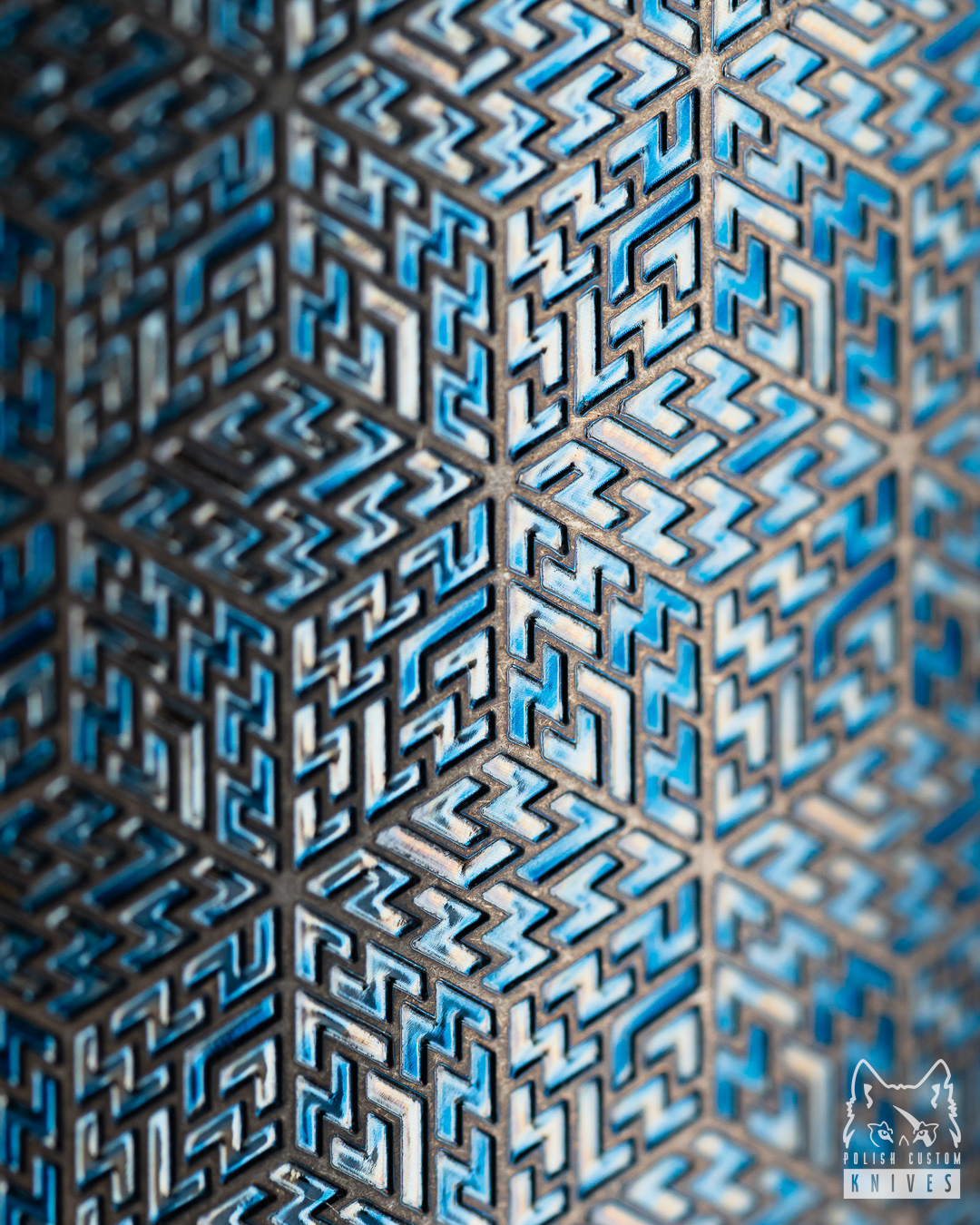
“Tesseract” is a geometric gateway to the fourth dimension. It transcends the limits of perception and imagination, creating the illusion of infinite space impossible to capture in a single glance. A full execution requires 24 continuous hours of work, making it the most complex engraving in our portfolio. The inlay version, crafted in 10 hours, retains the same depth and multidimensional character. “Tesseract” is a symbol of seeking new paths where others see only the horizon.
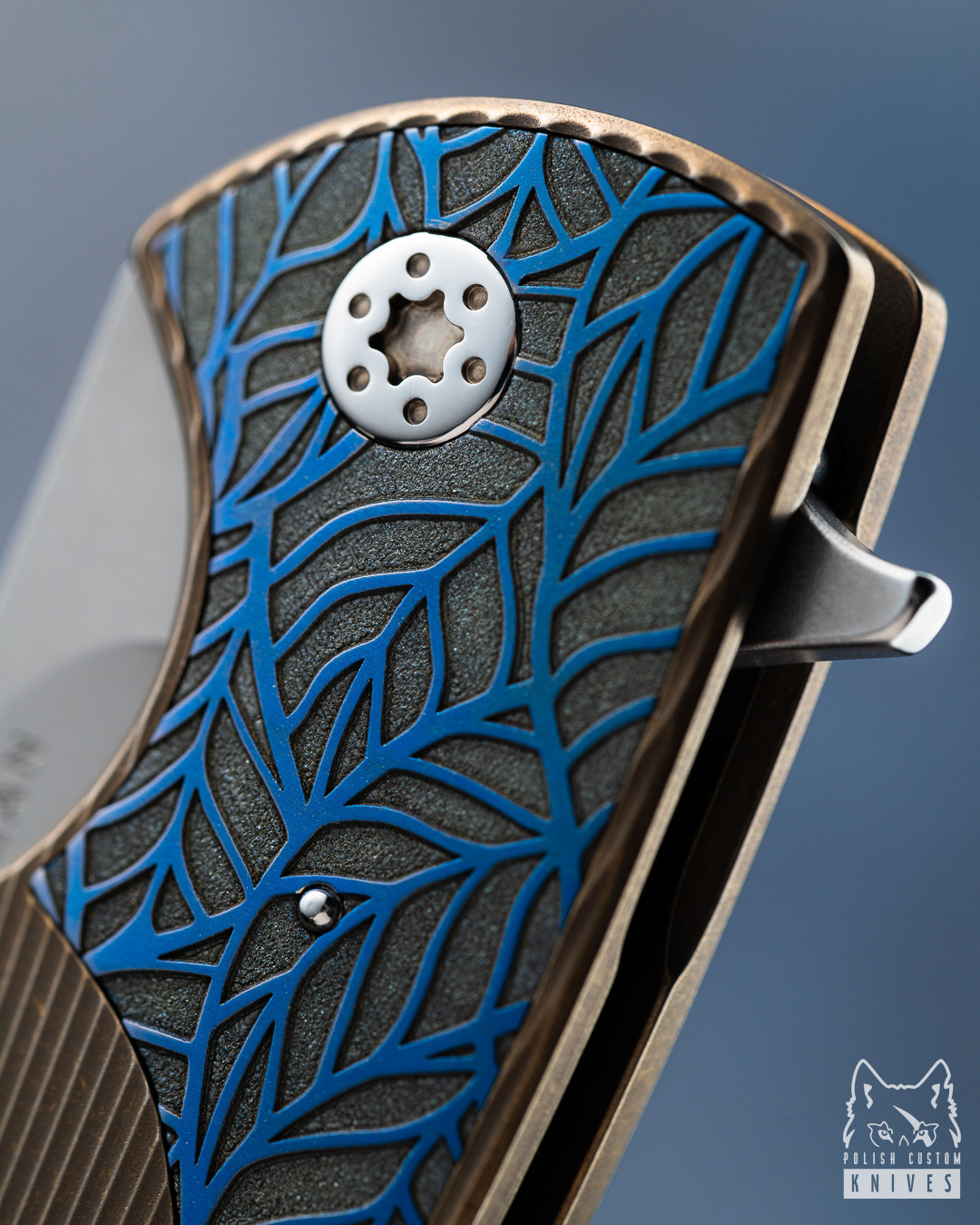
“Leaves” is a tribute to nature and its cyclical rhythm. Delicate veins spread across the surface like a network of life-giving paths, reminding us of the transience and repeatability of each season. Taking 5 hours to complete, this pattern carries peace, balance, and organic beauty that contrasts with the coldness of metal. It tells a story of harmony between man and nature – the breath of the earth captured in steel.
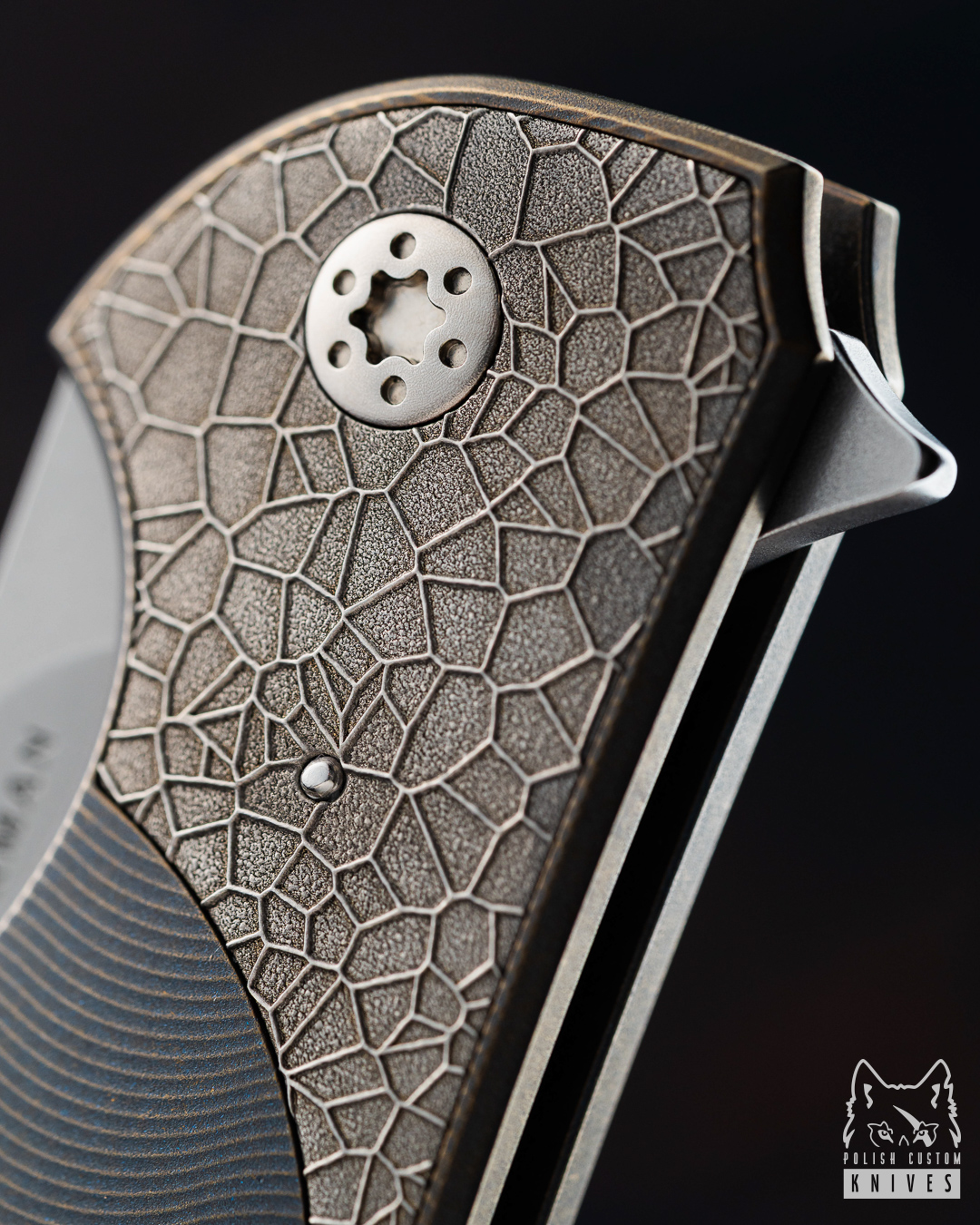
The “Rocks” motif embodies the rawness of mountains and the power of nature, translated into a geometric language. The lines resemble fractures and rock layers shaped over millennia by time and elements. Though executed in just 5 hours, the effect feels timeless, more enduring than the metal itself. “Rocks” is a symbol of stability, strength, and primal energy locked within the blade.
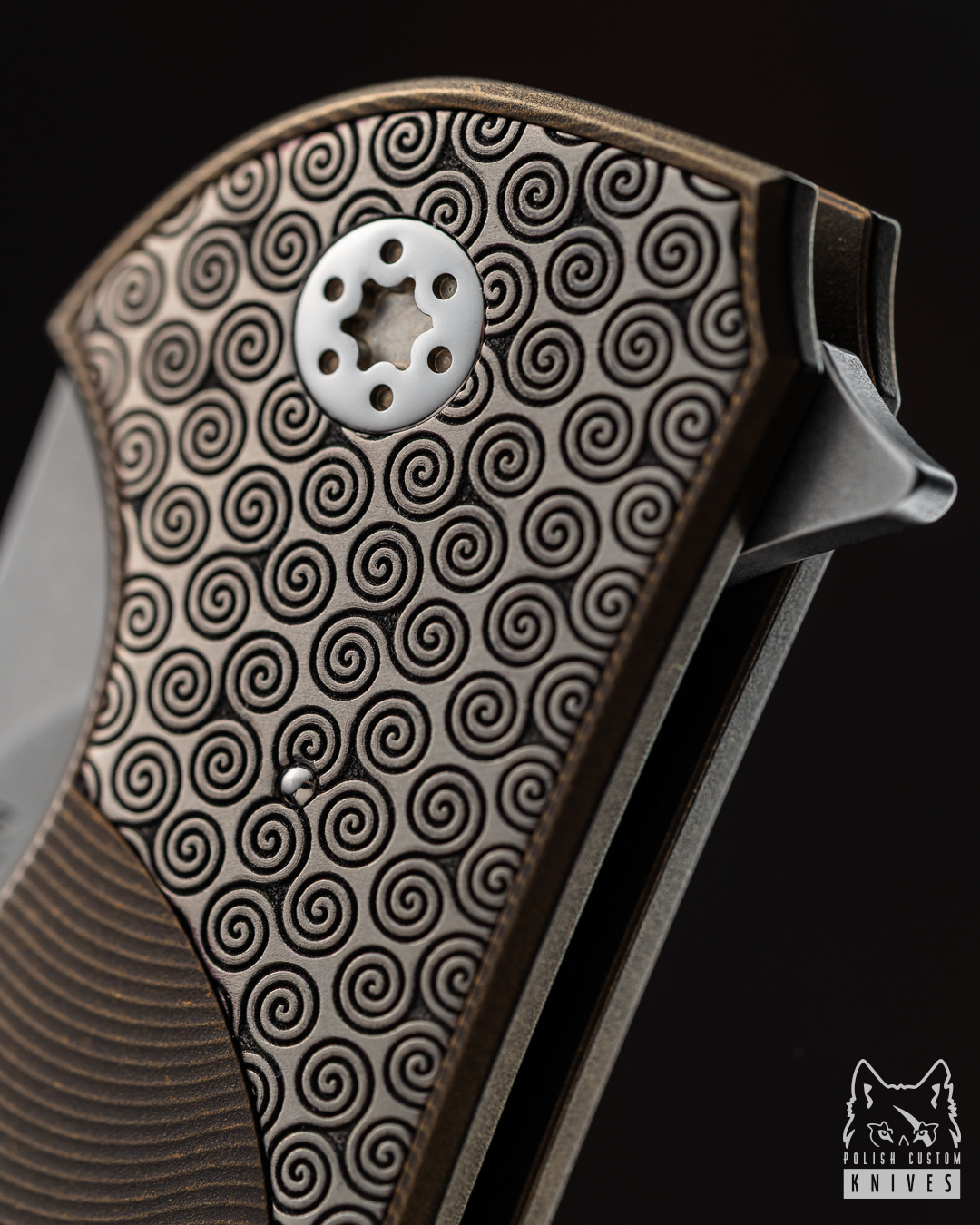
“Spirals” are a dance of swirls and vortices – a symbol of constant motion and change. It lives on the surface of the metal, shifting with light and perspective. Taking 5 hours to create, its lightness and fluidity evoke continuous growth and transformation. A dynamic engraving that brings a hint of playfulness and boundless energy into steel.
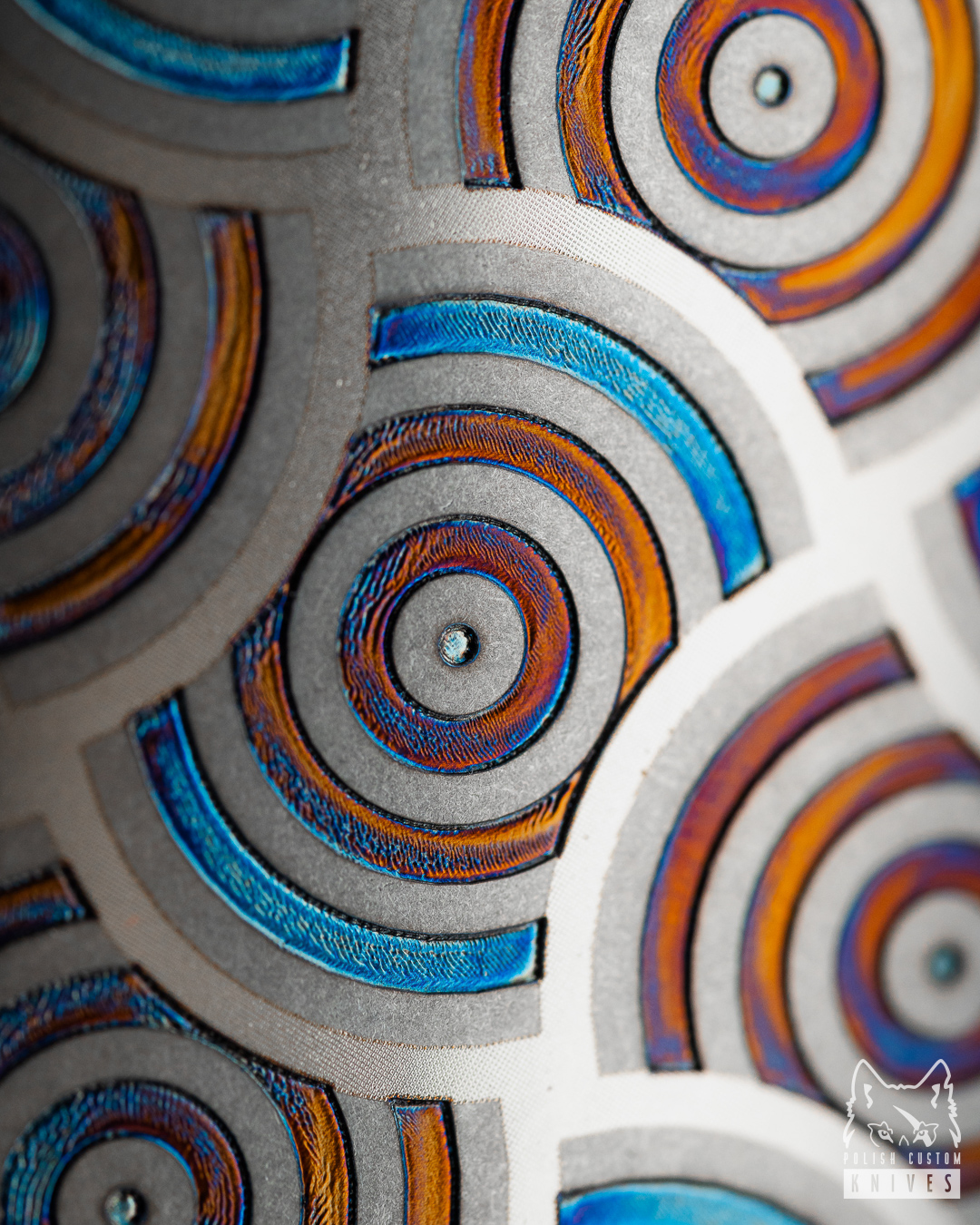
“Chrono Circle” is a clock etched in steel – a metaphor for the relentless passage of time and eternity hidden in its cycles. Concentric rings form a hypnotic structure, drawing the gaze like a mechanism that cannot be stopped. This engraving takes 17 hours to complete, each detail a reminder that time is the most precious resource we possess. A story of a moment frozen in metal.
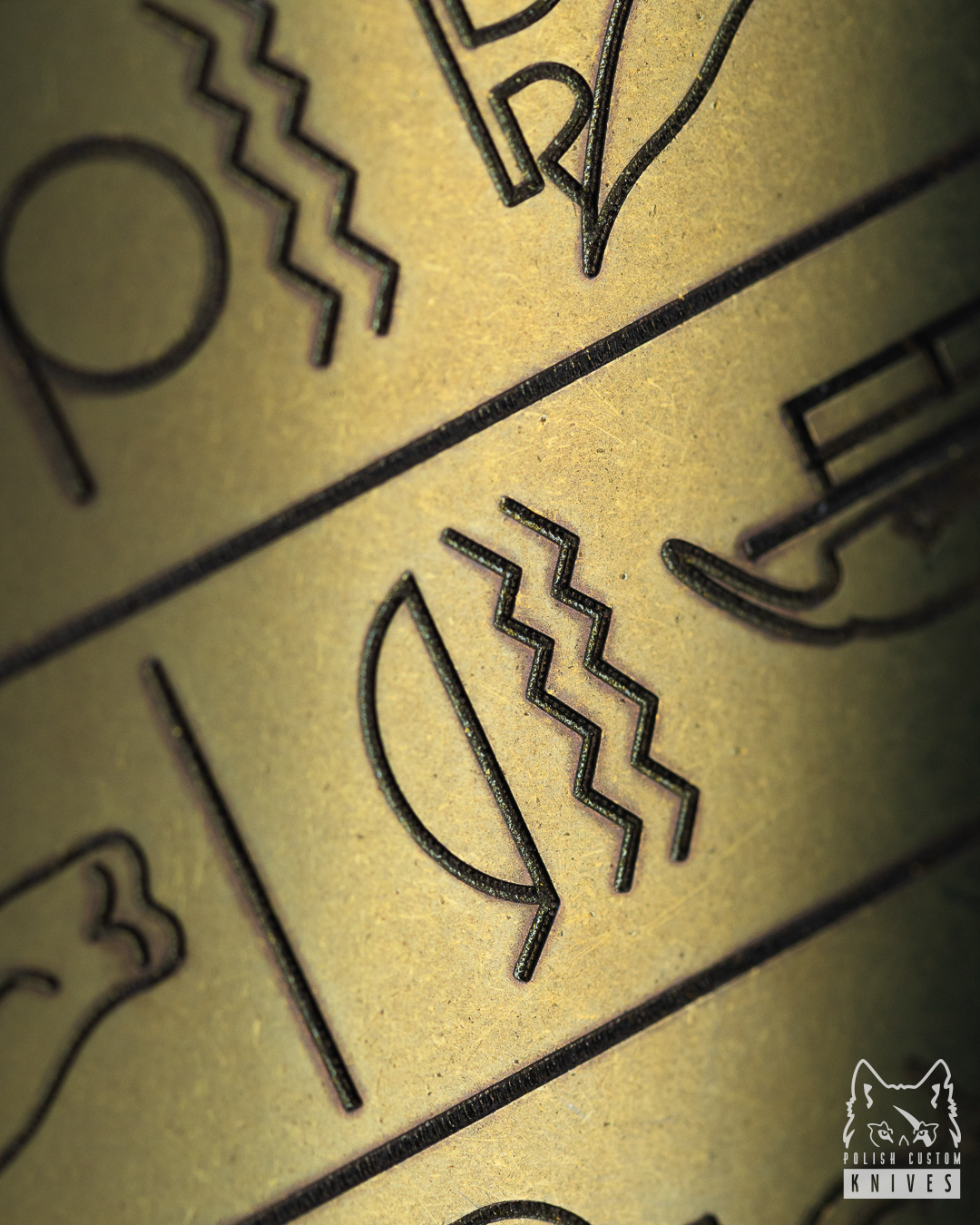
“Valley of the Kings” evokes the mysteries of ancient Egypt – monumental tombs, treasures buried in desert sands, and paths leading toward eternity. Its lines resemble ritual symbols, their meaning both hidden and fascinating. Completed in 4 hours, this engraving feels like a seal of ancient civilizations whose power has endured the ages.
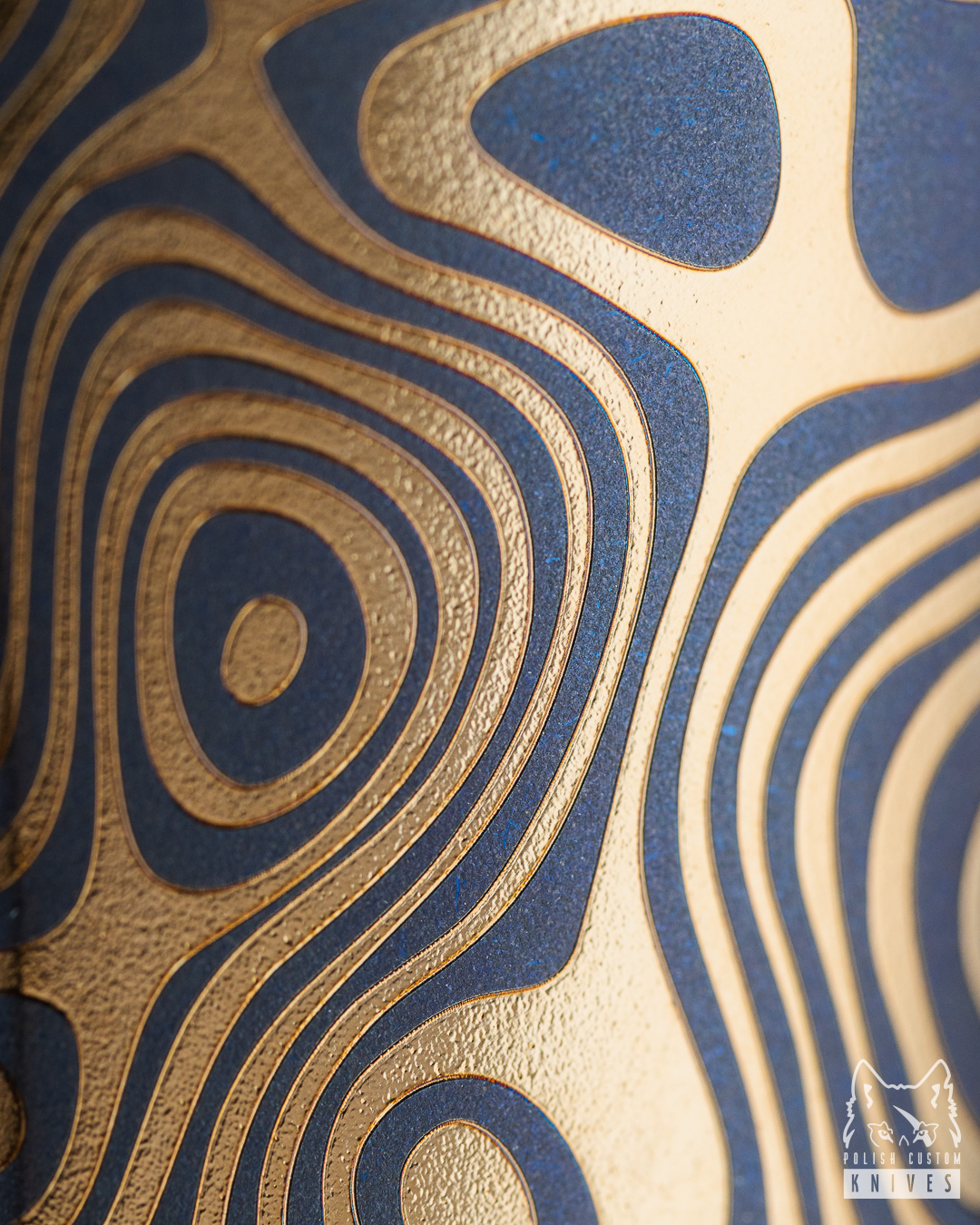
“Nebula Ripple” is the cosmos captured in metal – waves of light, nebulae pulsing with energy, traces of stellar explosions. This engraving, created over 11 hours, transforms a knife handle into a fragment of the universe – shimmering, incomprehensible, yet breathtakingly beautiful.
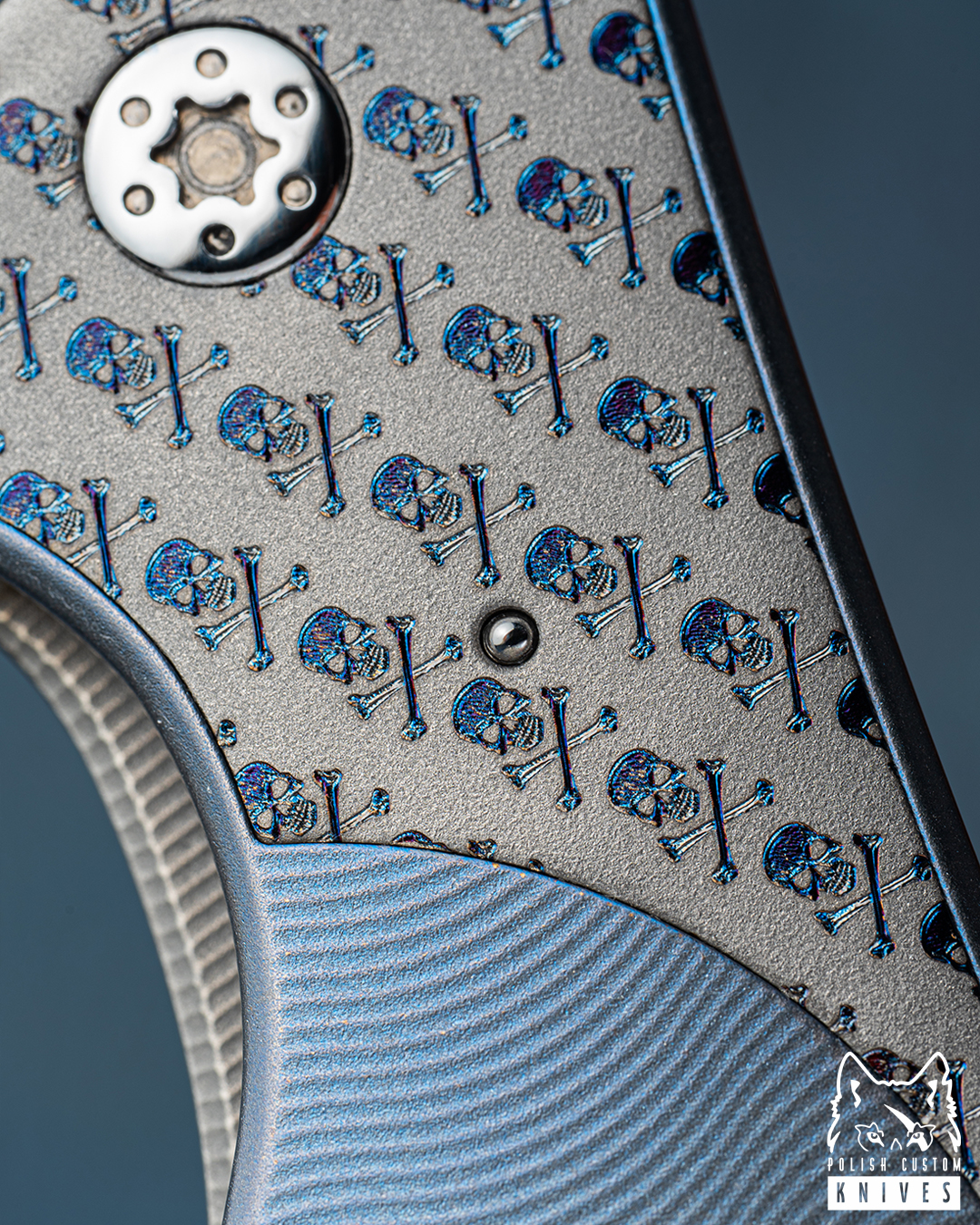
“Skulls” are an uncompromising symbol of strength and mortality. Bold, dark, and expressive, the design is a reminder of life’s fragility and the power of courage. Completed in 5 hours, its meaning stays with the owner forever. A motif for those who like to underline independence and character.
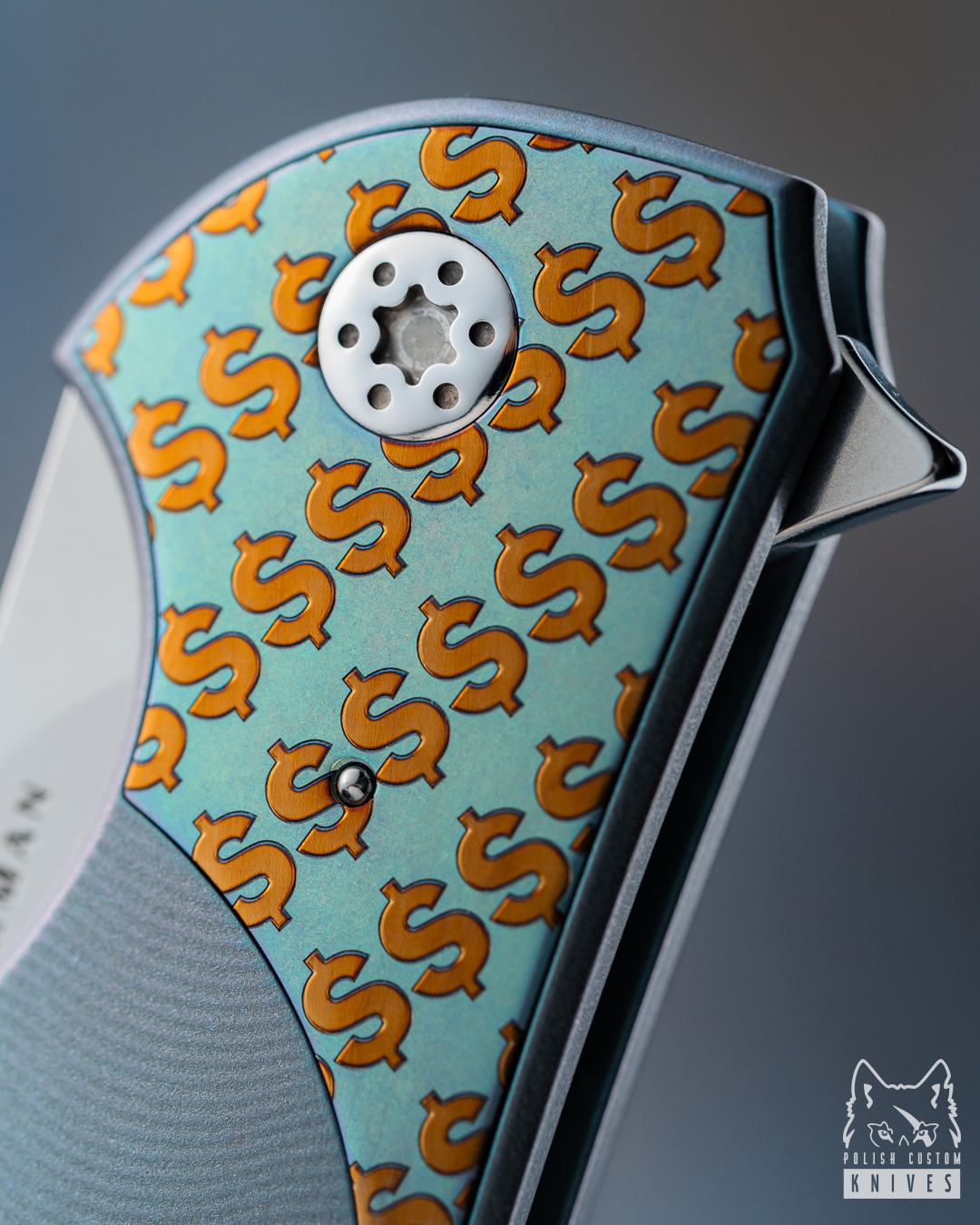
“Dollars” is a provocative and ironic pattern – referencing wealth, excess, and power. Created in 5 hours, it gives the handle the character of a manifesto: deliberate, witty, sometimes rebellious. The symbol of money becomes here a luxurious detail that provokes reflection on material value and its place in functional art.

"Eternal Garden" Eternal Garden is more than just an ornament; it is a tribute to the tradition of craftsmanship, where raw steel meets the organic beauty of nature.
The pattern invites a moment of stillness and contemplation – every line carries a rhythm, and every curve symbolizes the immortal, ever-renewing nature that has adorned the world’s finest weapons since antiquity in the form of the acanthus leaf. Designer Julia Jasiczak has infused this project with a jeweler’s attention to detail, giving the engraving an authentic, artisanal feel. The pattern plays subtly with light, lending the blade depth and an intriguing character.
Eternal Garden is a fusion of ancient heritage and the precision of modern technology. It was created for those who seek soul, elegance, and timelessness in a finely engraved knife.